
Falls are common among older adults, but many falls can be prevented with practical changes. This fall prevention checklist for seniors gives a clear, room-by-room and habit-by-habit plan you can use to reduce risk at home, during transfers, and at night. Use it to identify hazards, adopt safer routines, and decide when to seek professional help.
Quick answer
Use a comprehensive checklist that covers the home environment, movement strategies, medication review, vision and hearing checks, footwear and assistive devices, strength and balance exercises, and emergency planning. Start by making small, measurable changes in the bedroom and bathroom, then address medications and mobility needs with a healthcare professional. Regular exercise and home modifications can substantially lower the chance of falls.
Why this matters
Falls can lead to injuries, loss of independence, and changes in confidence that reduce activity. Preventing falls helps older adults maintain mobility, safety, and quality of life. A practical checklist makes prevention manageable by turning broad advice into specific actions you can take now.
How this checklist is organized
This checklist is arranged by setting and action type so you can work through it step by step. Start with the bedroom and bathroom because many falls occur during night-time movements. Then review footwear, medications, vision, and mobility. Finish by adding exercise, emergency planning, and ongoing monitoring.
Fall prevention checklist for seniors
Use the following checklist as a practical action plan. Read each item and place a check in the box as you complete it. Consider discussing items marked with an asterisk with a clinician, physical therapist, or occupational therapist.
Bedroom and sleeping area
- Clear a safe path to the bathroom. Remove clutter and ensure a continuous route from the bed to the door and bathroom without obstacles or loose rugs.
- Improve lighting. Place a night light near the bed and hallway. Keep a lamp within easy reach from the bed.
- Adjust bed height. The mattress should be at a height where feet rest flat on the floor when seated at the edge of the bed. If the bed is too high or too low, use a stable step or adjust the bed frame.
- Consider bed rails or transfer aids as appropriate.* Side rails, bed assist handles, or low-height rails can help some individuals. Discuss risks and benefits with a clinician because rails are not suitable for everyone.
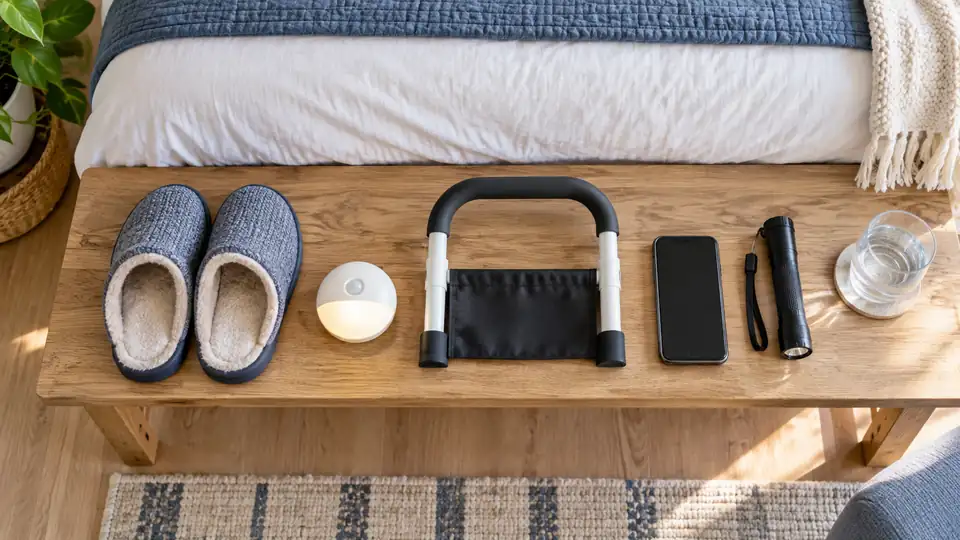
- Keep essential items within reach. Place a phone, glasses, medication, and a flashlight on the bedside table to avoid getting up unnecessarily during the night.
- Use non-slip mats. Place a non-slip mat beside the bed to reduce slipping when getting in and out.
- Reduce trip hazards. Remove electrical cords, loose blankets, and shoes from the walking area beside the bed.
Bathroom
- Install grab bars.* Place grab bars near the toilet and in the shower or tub. Bars should be professionally installed into studs or secure anchors to support weight safely.
- Use non-slip surfaces. Add non-slip strips or mats in the shower and tub. Use non-slip rugs outside the shower and secure them with double-sided tape if needed.
- Consider a raised toilet seat. A raised seat can make transfers easier and reduce bending.
- Use a shower chair or bench.* A chair allows bathing while seated, which reduces the risk of losing balance.
- Install a hand-held shower head. This reduces reaching and twisting while showering.
- Keep toiletries within easy reach. Place soap, shampoo, and towels at accessible heights to avoid reaching or stepping on a stool.
Lighting and electricals
- Improve overall lighting. Use bright, glare-free lighting in hallways, stairways, and entry points. Consider motion-sensor lights for night-time use.
- Replace dim bulbs. Higher lumen bulbs can improve visibility. Check lamp shades for dust that reduces light output.
- Mark steps and thresholds. Use contrasting tape on stair edges and changes in floor level to make them more visible.
- Secure cords. Tape or tuck extension cords along baseboards so they do not cross walking paths.
Flooring and rugs
- Use low-pile carpets or non-slip flooring. High-pile rugs and uneven surfaces increase trip risk.
- Remove small area rugs or secure them. Use non-slip rug pads or double-sided tape to keep rugs in place.
- Fix loose floorboards and uneven thresholds. Repair or mark transitions between different floor types.
Stairs and railings
- Install sturdy handrails on both sides of stairs. Rails should be continuous and easy to grip along the full length of the stairway.
- Keep stairs clear. Do not store items on stairs. Keep lighting at the top and bottom of stairwells.
- Consider stair aids or alternative sleeping arrangements. If night-time stair use is frequent and unsafe, consider moving a bedroom to the first floor.
Footwear and clothing
- Wear supportive shoes with non-slip soles. Avoid slippers with thin soles or slick bottoms. Shoes should fit well and support the heel.
- Use shoes indoors during activities with balance tasks. Bare feet can reduce traction.
- Avoid long, loose clothing that can trip a person. Hem clothes to a safer length if needed.
Medications and health checks
- Review medications regularly.* Some medications and combinations increase dizziness, drowsiness, or orthostatic hypotension. Ask a clinician or pharmacist to review medications for fall risk.
- Watch for side effects. Note symptoms such as dizziness, blurred vision, or excessive drowsiness after starting a new medication.
- Manage chronic conditions. Conditions such as Parkinson-type movement disorders, arthritis, and diabetes can affect balance. Regular follow-up with clinicians is important.
Vision and hearing
- Schedule annual vision checks. Updated prescriptions and cataract care may reduce fall risk.
- Improve contrast and lighting. High contrast between steps and flooring helps when vision is impaired.
- Address hearing loss. Hearing aids can help with spatial orientation and awareness of environmental hazards.
Assistive devices and mobility aids
- Use canes or walkers as prescribed.* Make sure devices are adjusted to the correct height by a clinician or therapist.
- Check equipment condition regularly. Replace worn rubber tips on canes and check walker brakes and wheels.
- Consider a transfer bench or gait belt for transfers.* These can help caregivers move someone safely while reducing fall risk.
Strength, balance, and physical activity
- Start a balance and strength program.* Exercises such as standing on one foot, heel-to-toe walking, and resistance training can improve stability. Ask a physical therapist for a safe routine.
- Include flexibility and mobility exercises. Stretching and range-of-motion work help with comfortable movement.
- Be consistent. Aim for balance exercises most days of the week and strength training two to three times weekly.
Daily routines and safe movement
- Pause before standing from a seated position. Sit for a moment, swing the legs, and stand slowly to reduce dizziness.
- Use stable surfaces for support. Push from armrests or a firm table rather than reaching for furniture that might move.
- Plan movements in advance. Keep pathways clear and take one task at a time to avoid rushing.
- Carry items safely. Use a small bag or waistband to keep hands free rather than carrying objects that block view or upset balance.
Night-time precautions
- Use a bedside commode if needed. This can reduce the need to walk to the bathroom at night.
- Keep slippers or supportive shoes at bedside. Put them on before rising to walk.
- Consider motion-sensor lighting in hallways. Sensors reduce the need to fumble for switches in the dark.
Emergency planning
- Have an accessible phone or personal alarm. A wearable emergency button or a phone within reach can speed help if a fall occurs.
- Create a check-in plan. Arrange regular calls or visits with family, friends, or caregivers, especially after illnesses or medication changes.
- Program emergency contacts. Place emergency numbers on or near each phone and in the phone directory.
Home modifications and larger changes
- Consider ramps for steps and threshold transitions. Ramps reduce trip risk for people using walkers or wheelchairs.
- Install a stair lift if stairs are unavoidable. This may be safer than repeated stair climbs for those with mobility limitations.
- Hire a home safety specialist.* An occupational therapist can perform a home safety assessment and recommend modifications tailored to needs.
Who is most at risk
Several factors can increase fall risk. People with multiple medications, mobility limitations, poor vision, unstable blood pressure, and certain chronic conditions are commonly at higher risk. Environmental hazards, such as loose rugs or poor lighting, can increase risk for anyone. A person who has recently had a hospital stay, surgery, or an increasingly sedentary lifestyle may be more vulnerable until strength and confidence return.
For techniques specific to night transfers, review Prevent Falls from Bed for targeted recommendations.
Main causes of falls
Falls usually occur when multiple risk factors interact. Common contributors include:
- Balance and strength decline due to aging or inactivity.
- Medication side effects causing dizziness or drowsiness.
- Vision or hearing impairment that reduces environmental awareness.
- Environmental hazards such as poor lighting, loose rugs, and clutter.
- Unsafe footwear or clothing that catches on objects.
- Unsafe movement habits such as rushing, turning quickly, or standing up too fast.
Practical prevention strategies
Prevention is most effective when it combines home changes, medical review, and regular activity. Below are prioritized steps to implement over the short and medium term.
Immediate actions you can take today
- Remove loose rugs and declutter pathways.
- Place night lights in the bedroom and hallway.
- Put shoes within reach and secure non-slip mats beside the bed.
- Keep a phone or alert device on or near the bedside table.
Within one to four weeks
- Schedule medication and vision reviews.
- Install grab bars in the bathroom and check stair handrails.
- Begin a supervised balance and strength exercise program.
- Replace worn footwear and add non-slip soles if needed.
Within one to three months
- Complete a home safety assessment with an occupational therapist if possible.*
- Complete recommended home modifications such as secure handrails, fixed thresholds, and improved lighting.
- Adopt a regular exercise routine and track progress in strength and balance.
Common mistakes to avoid
- Waiting until a fall occurs: Make preventive changes early rather than after an incident.
- Dismissing minor symptoms: Lightheadedness, unsteadiness, or new dizziness should prompt a discussion with a clinician.
- Over-reliance on handrails that are not secure: Handrails must be properly installed and strong enough to bear weight.
- Using devices without instruction: Canes, walkers, and lift devices should be fitted and techniques taught by a professional.
- Ignoring footwear: Shoes that do not fit or have slippery soles are common contributors to falls.
When professional help may be needed
Discuss these situations with a clinician, physical therapist, occupational therapist, or pharmacist.
- Two or more falls in 12 months.
- Any fall that causes injury, loss of consciousness, or long recovery time.
- New or worsening dizziness, fainting, or vision changes.
- Difficulty rising from a chair, walking, or climbing stairs.
- Complex medication regimens or recent medication changes.
- Home environments with multiple hazards that require structural changes.
How to use a checklist with caregivers and family
Make the checklist a shared tool. Walk through the home together, marking completed items and noting priorities. Use simple assignments such as:
- Caregiver: install night lights and secure rugs this week.
- Family member: schedule a medication review and vision appointment.
- Care team: refer for physical therapy for balance training.
Keep a visible copy of the checklist in the home and review it every three months or after any health change.
Examples of practical adjustments
Below are realistic scenarios that illustrate how small changes reduce risk.
- An older adult who wakes at night to use the bathroom can reduce risk by using a bedside commode, adding a night light, and keeping a phone on the bedside table.
- A person who feels dizzy after standing can ask a clinician to review medications and try standing slowly, sitting briefly after rising, and using a stable surface for balance while shifting weight.
- Someone who trips on a rug can remove small area rugs, replace them with low-pile mats, and add non-slip pads to any remaining rugs.
Monitoring and follow-up
- Keep a fall diary for three months if you are concerned. Note date, time, circumstances, and any symptoms such as dizziness.
- Review the checklist quarterly and after illness or medication changes.
- Track progress with strength and balance exercises by recording frequency and improvements in daily tasks.
Tools and resources
The following tools may help implement the checklist:
- Home safety checklist forms from a local health authority or occupational therapy service.
- Wearable emergency alert devices or medical alert services.
- Community exercise classes focusing on balance, such as Tai Chi or senior strength classes, and physical therapy referrals for tailored programs.
- Professional home modification assessments offered by occupational therapists or certified aging-in-place specialists.
Frequently asked questions
How often should medications be reviewed for fall risk?
Medications should be reviewed at least once a year and after any new prescription or hospital stay. A clinician or pharmacist can identify medications that may increase fall risk and suggest alternatives or dose adjustments.
Are bed rails safe for seniors?
Bed rails can provide support for some people, but they are not appropriate for everyone. Risks include entrapment and difficulty getting out of bed. Discuss bed rails with a clinician or occupational therapist to weigh risks and benefits and to explore safer alternatives such as low beds or bed transfer handles.
What kind of exercise helps prevent falls?
Programs that include balance training, strength training for lower limbs, and flexibility are most effective. Examples include Tai Chi, physiotherapist-prescribed balance exercises, and resistance training. A healthcare professional can recommend exercises that match an individual’s ability and health status.
Should I remove all rugs from the home?
Not necessarily. Low-pile rugs with non-slip pads can be safe. The key is to secure rugs so they do not move and to avoid small loose rugs that can bunch up. Use non-slip underlay and tape any edges that lift.
How can I tell if a fall requires emergency care?
Seek immediate medical attention for falls that cause loss of consciousness, severe pain, head injury, leg or hip deformity, difficulty breathing, or ongoing dizziness. For minor falls without obvious injury, monitor symptoms and contact a clinician if pain, swelling, or changes in mobility occur.
Can vision problems really increase fall risk?
Yes. Reduced visual acuity, contrast sensitivity, and problems with depth perception can make it harder to detect hazards. Regular eye exams and timely treatment of conditions like cataracts can help reduce risk.
How can family members help without taking away independence?
Focus on collaborative problem solving. Offer help with home changes, schedule health reviews, and support safe routines such as exercise and footwear choices. Encourage independence by recommending adaptive tools that allow safer self-care, and involve the older adult in decision-making about modifications.
Conclusion
Preventing falls is a multi-step process that combines safer home environments, careful medication management, regular vision and hearing checks, appropriate footwear, assistive devices, and strength and balance training. Use this fall prevention checklist for seniors to prioritize immediate changes and plan longer-term solutions. Work with healthcare professionals for medication reviews and tailored exercise programs, and consider occupational therapy for a home safety assessment. Small, consistent steps can make a meaningful difference in safety and confidence.