
Arthritis can affect balance, strength, and movement, and many people wonder whether arthritis can increase fall risk when caring for themselves or someone they support. This article explains how different types of arthritis can contribute to falls, what makes fall risk higher, and practical steps caregivers and older adults can take to reduce that risk. The goal is to provide clear, actionable guidance for preventing falls while respecting medical limits and encouraging discussion with healthcare professionals.
Quick answer
Yes. Arthritis can increase fall risk by contributing to joint pain, stiffness, reduced range of motion, muscle weakness, and changes in walking patterns. These effects, together with medications, vision changes, and other age-related issues, may make falls more likely. Practical strategies that may help reduce risk include appropriate exercise, home modifications, suitable footwear, and working with healthcare professionals to review medications and mobility concerns.
Why this matters
Falls are a common cause of injury for older adults and people with mobility limitations. When arthritis is a contributing factor, a fall can lead to serious consequences, including fractures, loss of independence, and slower recovery. Understanding how arthritis may increase fall risk helps caregivers and individuals take practical steps to improve safety, confidence, and mobility.
How arthritis can increase fall risk
Arthritis is not one single problem. It includes conditions such as osteoarthritis and inflammatory arthritis, each affecting joints and surrounding tissues differently. Arthritis may contribute to fall risk through physical effects, changes in movement, and interactions with other health issues.
Pain and guarded movement
Pain can change how people move. Someone with painful knee or hip arthritis may take shorter steps, avoid placing full weight on one leg, or change their posture. These compensations can reduce stability and make it more difficult to recover balance after a trip or slip.
Stiffness and reduced range of motion
Joint stiffness limits how far a person can comfortably move a joint. Stiff ankles, knees, or hips can make it harder to step over obstacles, rise from a chair, or correct balance quickly. Limited neck or trunk mobility may also make it more difficult to look around and respond to hazards in the environment.
Muscle weakness
Arthritis can lead to reduced activity when movement is painful or uncomfortable. Over time, the muscles supporting affected joints may become weaker. Weakness in the hips, knees, and ankles can reduce the body’s ability to make the quick adjustments needed to regain balance.
Altered gait and balance
Changes in walking pattern, often described as gait changes, can include shorter or shuffling steps, uneven weight distribution, and slower walking speed. Depending on their severity, these changes may reduce stability and make it more difficult to recover from trips or slips.
Joint instability and changes in proprioception
Some forms of arthritis can contribute to joint instability or structural changes. Problems affecting a joint may also interfere with proprioception, the body’s awareness of joint position and movement. Proprioception plays an important role in balance and coordinated movement.
Foot pain and footwear problems
Arthritis affecting the feet can make stable footwear uncomfortable. Foot pain or deformity may also change how weight is distributed while standing or walking. In some cases, people may choose loose or less supportive footwear because it feels more comfortable, even though it may provide less stability.
Fatigue and systemic effects
Certain inflammatory forms of arthritis can be associated with fatigue. When someone is tired, attention and reaction time may be reduced, which can make it more difficult to respond quickly to a loss of balance.
Medication effects
Some medications used by people with arthritis may cause side effects such as dizziness, drowsiness, or changes in blood pressure. The effects vary considerably by medication and individual. Anyone experiencing new dizziness, sedation, or balance problems after starting or changing medication should discuss these symptoms with a healthcare professional.
Main causes related to arthritis
The relationship between arthritis and falls is usually multifactorial. Pain, stiffness, weakness, gait changes, altered sensation, fatigue, and medication effects can interact rather than acting independently. Identifying which factors affect a particular person can make prevention efforts more targeted.
Pain management and mobility
Pain can limit normal movement and lead people to avoid activities that have become uncomfortable. Appropriate pain management may help support mobility, but the best approach depends on the type and severity of arthritis and the person’s overall health. Options may include clinician-recommended medications, topical treatments, heat or cold, physical therapy, or other non-drug approaches.
Loss of strength and conditioning
Reduced activity can gradually lead to deconditioning. Maintaining or rebuilding strength in the muscle groups involved in standing and walking may improve mobility and the ability to respond to balance challenges. Exercise should be adapted to the person’s joint condition, pain level, and physical ability.
Impaired sensation and proprioception
Joint problems can sometimes affect the sensory feedback that helps a person understand where their limbs are positioned. Reduced proprioceptive awareness may make balance more challenging, particularly on uneven surfaces or while changing direction.
Risk factors that make falls more likely
Arthritis often interacts with other fall risk factors. When several are present at the same time, the overall risk may be greater.
- Advanced age. Age-related changes in vision, strength, and reaction time can compound mobility problems associated with arthritis.
- Multiple joint involvement. Arthritis affecting the hips, knees, ankles, feet, or spine may have a greater impact on walking and transfers.
- Poor vision. Difficulty seeing obstacles, changes in floor level, or steps can increase tripping risk.
- Medications. Some sedatives, pain medications, blood pressure medicines, and other drugs may cause dizziness, drowsiness, or balance problems.
- History of prior falls. Previous falls or near-falls are important information when evaluating future fall risk.
- Foot problems. Painful or deformed feet can reduce stable contact with the ground and affect gait.
- Home hazards. Loose rugs, clutter, poor lighting, slippery floors, and other environmental hazards can make an existing mobility problem more consequential.
- Other health conditions. Neuropathy, neurological conditions, cardiovascular problems, and other conditions affecting movement or balance can combine with arthritis-related limitations.
Who is most at risk
Not everyone with arthritis has the same fall risk. People may be at greater risk when arthritis-related mobility problems occur alongside other physical, environmental, or medication-related factors.
- An older adult with painful knee osteoarthritis who takes several medications and already has poor balance or lower-body weakness.
- A person with inflammatory arthritis who experiences substantial fatigue and occasional dizziness.
- Someone with foot arthritis who has difficulty finding supportive footwear and also has hazards such as loose rugs at home.
- A person whose arthritis makes getting out of bed, standing from a chair, or navigating stairs difficult.
- Someone who has already experienced falls or frequent near-falls.
Practical prevention strategies
Reducing fall risk usually requires more than addressing a single factor. A practical approach may combine strength and balance work, appropriate arthritis management, environmental changes, suitable footwear, medication review, and mobility support.
Assess risk and develop a plan
Start by looking at the factors that could realistically contribute to a fall. These may include pain locations, mobility limitations, previous falls or near-falls, medications, vision, footwear, and hazards around the home. A primary care provider, physical therapist, or occupational therapist can perform a more formal assessment when needed.
Exercise and physical therapy
Appropriately selected physical activity can support strength, mobility, and balance. The right exercises depend on the joints affected, severity of symptoms, and overall health.
- Balance training. Exercises designed to challenge balance in a controlled environment may help improve stability. Support should be available when needed.
- Strength training. Strengthening muscles around the hips, knees, calves, and ankles can support everyday movements such as walking and standing from a chair.
- Range-of-motion and flexibility exercises. Gentle movements may help maintain mobility in stiff joints.
- Functional training. Practicing movements such as sitting and standing, turning, and stepping can target activities encountered in daily life.
- Supervised programs. A physical therapist can adapt exercises to joint pain, physical limitations, and individual fall risk.
People with significant pain, recent surgery, severe mobility limitations, or other medical concerns should discuss an appropriate exercise plan with a healthcare professional.
Joint protection and pacing
Breaking demanding activities into smaller steps and allowing adequate rest can help reduce fatigue. Joint-protection techniques may also make everyday movements more comfortable. An occupational or physical therapist can recommend strategies based on the affected joints and the person’s daily activities.
Medication review
Have medications reviewed periodically by a healthcare professional, particularly after a fall or when new dizziness, drowsiness, or balance problems appear. Some medications can contribute to sedation or changes in blood pressure. Medication changes should be made with professional guidance rather than independently.
Footwear and foot care
Stable, properly fitting footwear can support safer movement. Features that may be useful include a secure fit, adequate traction, and a stable sole. People with significant foot deformity or persistent foot pain may benefit from professional assessment and individualized footwear advice.
Assistive devices and proper use
Walking aids such as canes and walkers can provide additional support when appropriate. The device should be correctly fitted, and the person should know how to use it safely. A physical or occupational therapist can help select and adjust mobility aids.
Home modifications
Small environmental changes can remove hazards that become more difficult to negotiate when joints are painful or stiff.
- Improve lighting in hallways, stairways, bathrooms, and bedrooms.
- Remove or secure loose rugs and keep electrical cords out of walking paths.
- Reduce clutter in frequently used areas.
- Install appropriate grab bars near toilets and bathing areas when needed.
- Use suitable non-slip surfaces in wet areas.
- Consider whether bed and chair heights make transfers unnecessarily difficult.
- Keep frequently used items within comfortable reach to reduce unnecessary bending, stretching, or climbing.
Safe transfers and bed safety
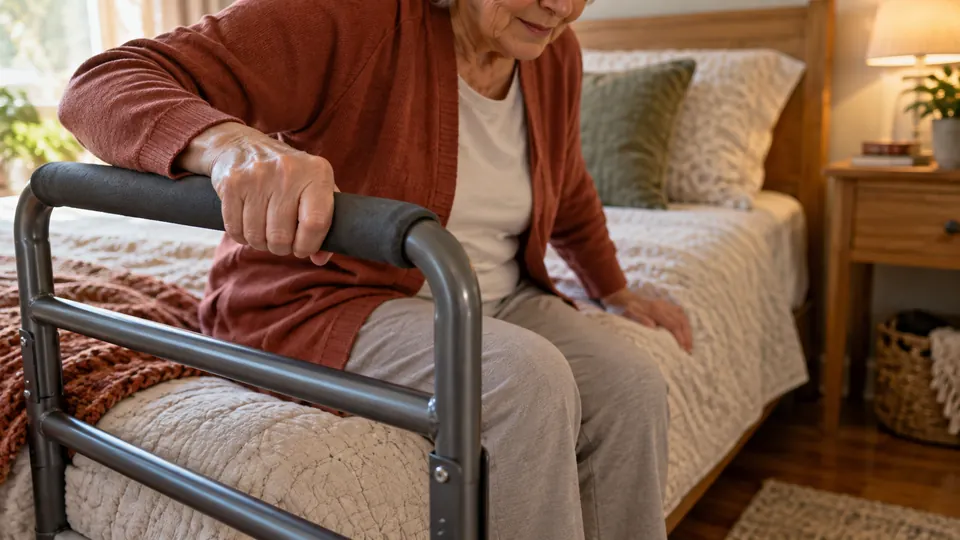
For people with arthritis, nighttime transfers can be especially challenging because stiffness may be more noticeable after lying still for several hours. Understanding why seniors fall out of bed can also help caregivers identify risks related to nighttime movement, medication effects, transfers, and the bedroom environment.
Bed-related falls can occur while getting into or out of bed, particularly when someone is sleepy, stiff, in pain, or moving through a dark room. Practical strategies include:
- Place lighting within easy reach of the bed, including motion-activated night lights where appropriate.
- Keep the route between the bed and bathroom clear of clutter and trip hazards.
- Make sure the bed height allows the person to transfer comfortably.
- Use stable, appropriately designed supports rather than relying on furniture that could move or tip.
- Use suitable non-slip footwear when getting out of bed.
- If dizziness occurs after standing, discuss it with a healthcare professional rather than assuming it is caused by arthritis.
- Consider bed rails cautiously. They may be useful in some circumstances but can also create entrapment, climbing, or transfer hazards and are not appropriate for everyone.
For older adults who need additional bedside support, our guide to bed guards for seniors covers options designed for different mobility and nighttime safety needs.
Vision and hearing
Vision problems can make obstacles, stairs, and changes in floor level harder to detect. Regular eye examinations and appropriate corrective lenses can therefore form part of a broader fall-prevention approach. Hearing concerns should also be addressed when they affect awareness or communication.
Assistive technology and monitoring
Personal emergency response systems, motion sensors, and some types of bed alarms can provide additional support in particular situations. These tools are generally most useful as part of a broader safety plan rather than as substitutes for addressing mobility problems and environmental hazards.
Common mistakes to avoid
Some well-intentioned approaches can be ineffective or introduce additional risks.
- Ignoring persistent pain. Pain that significantly changes walking or daily activity deserves appropriate evaluation rather than simply being accepted as part of aging.
- Using assistive devices incorrectly. An improperly fitted cane or walker can be awkward or unstable. Proper fitting and instruction are important.
- Relying entirely on medication. Medication may be one part of arthritis management, but mobility, strength, footwear, and environmental factors can also influence fall risk.
- Avoiding all physical activity because of arthritis. Excessive inactivity can contribute to deconditioning. Appropriate activity should be adapted to the person’s symptoms and medical circumstances.
- Neglecting the home environment. Small hazards become more important when mobility is already limited. Lighting, clutter, rugs, stairs, and bathroom safety deserve attention.
- Assuming bed rails are automatically safer. Bed rails have potential benefits and risks. Their suitability depends on the individual, bed configuration, mobility, cognition, and intended use.
When professional help may be needed
Professional evaluation may be appropriate when fall risk is high, falls have already occurred, or arthritis symptoms substantially interfere with safe movement.
Consider contacting a healthcare professional if
- There has been a recent fall or repeated near-falls.
- Joint pain or stiffness is significantly limiting walking or transfers.
- New dizziness, fainting, or unexplained loss of balance occurs.
- A medication change is followed by drowsiness, dizziness, or unsteadiness.
- Vision or other sensory problems are making movement less safe.
- Mobility has noticeably declined over a short period.
Professionals who may be able to help
- Primary care provider. Can assess overall health, review medications, and coordinate referrals.
- Physical therapist. Can assess gait, strength, balance, and transfers and develop an appropriate exercise program.
- Occupational therapist. Can evaluate daily activities and the home environment and recommend practical adaptations.
- Podiatrist. Can assess persistent foot pain, deformity, and footwear concerns.
- Eye care professional. Can identify and manage vision problems that may contribute to falls.
- Rheumatologist. Can provide specialist assessment and management for inflammatory and complex forms of arthritis.
Practical example plans
The following generalized examples illustrate how several strategies can be combined. They are not individualized treatment plans and should be adapted to a person’s circumstances with appropriate professional input.
Example plan for someone with knee osteoarthritis and recent near-falls
- Arrange a medication and fall-risk review with a healthcare professional.
- Ask whether physical therapy focused on lower-body strength, mobility, and balance would be appropriate.
- Remove loose rugs and improve nighttime lighting between the bed and bathroom.
- Choose secure, supportive footwear with suitable traction.
- Have a cane or other mobility aid professionally fitted if additional support is needed.
Example plan for someone with inflammatory arthritis who reports fatigue and dizziness
- Discuss dizziness and current medications with a healthcare professional.
- Work with the appropriate clinician on managing arthritis symptoms and fatigue.
- Use an appropriately tailored activity program to maintain strength and mobility.
- Review bathroom and bedroom safety, including lighting, grab bars, and clear walking paths.
- Consider whether monitoring or alert technology would provide useful additional support.
Monitoring progress and adjusting the plan
Fall prevention is an ongoing process rather than a one-time project. Changes in arthritis symptoms, medications, mobility, vision, and the home environment can alter risk over time.
Pay attention to new falls or near-falls, changes in walking, increasing difficulty with transfers, and new dizziness or drowsiness. Assistive devices may also need to be reassessed as mobility changes. Significant changes should be discussed with the appropriate healthcare professional.
Frequently asked questions
Can any type of arthritis increase fall risk?
Several types of arthritis may contribute to fall risk, particularly when they affect weight-bearing joints or cause substantial pain, stiffness, weakness, fatigue, or mobility limitations. The degree of risk depends on the joints affected, symptom severity, overall health, medications, and other fall risk factors.
Are there specific exercises that help people with arthritis avoid falls?
Balance, strength, flexibility, and functional exercises may all be useful depending on the person’s abilities. Examples can include appropriately supported sit-to-stand practice, lower-body strengthening, and balance exercises. Because arthritis varies considerably between individuals, a physical therapist can help determine which exercises are suitable and how they should be progressed.
Do walking aids prevent falls for people with arthritis?
A walking aid may improve stability for someone who needs additional support, but it should be appropriately selected, fitted, and used. An unsuitable or incorrectly used device can create problems of its own. A physical or occupational therapist can help determine whether a cane, walker, or another aid is appropriate.
Should caregivers install bed rails for someone who has arthritis and falls at night?
Not automatically. Bed rails may provide useful support in some circumstances, but they can also create risks such as entrapment or attempts to climb over the rail. The person’s mobility, cognition, bed and mattress configuration, and reason for using the rail should all be considered. A healthcare professional or occupational therapist can help assess whether a rail is appropriate.
How often should medications be reviewed for fall risk?
Medication review is particularly useful when a new medication is started, a dose changes, a fall occurs, or new symptoms such as dizziness, drowsiness, or unsteadiness develop. People taking several medications may also benefit from periodic reviews with a clinician or pharmacist.
Can losing weight reduce fall risk for people with arthritis?
For some people with arthritis affecting weight-bearing joints, weight management may help reduce joint stress and improve mobility. However, the relationship between body weight and fall risk is complex, and losing weight is not automatically an appropriate fall-prevention strategy for every older adult. Maintaining strength and adequate nutrition is also important. Individual weight-management decisions should take overall health and medical circumstances into account.
When should someone with arthritis see a specialist about falls?
Professional assessment is particularly important when falls or near-falls are recurring, mobility changes substantially, dizziness or fainting occurs, or arthritis symptoms significantly interfere with safe walking and transfers. Depending on the underlying issue, appropriate professionals may include a primary care provider, rheumatologist, physical therapist, occupational therapist, pharmacist, or other specialist.
Conclusion
Arthritis can increase fall risk through several pathways, including pain, stiffness, weakness, changes in gait, fatigue, and mobility limitations. The degree of risk varies according to the type and severity of arthritis, the joints affected, medications, other health conditions, and the surrounding environment.
Fall prevention is therefore most effective when it addresses the person’s overall situation rather than arthritis alone. Practical steps can include maintaining appropriate strength and mobility, reviewing medications, choosing stable footwear, removing home hazards, improving nighttime lighting, using assistive devices correctly, and making bed and bathroom transfers safer.
People experiencing repeated falls, significant mobility changes, new dizziness, or difficulty managing arthritis safely should discuss these concerns with a healthcare professional. A personalized approach can help preserve both safety and independence.