
Hearing loss is common among older adults and can occur alongside a range of chronic health conditions. Many people wonder whether reduced hearing can directly increase the likelihood of a fall. Hearing loss has been associated with fall risk, although the relationship is complex and may involve environmental awareness, attention, balance disorders, and other health factors. This article explains how hearing difficulties may affect everyday safety and offers practical steps caregivers and older adults can take to reduce fall risk.
Quick answer
Yes. Hearing loss may contribute to a higher risk of falling, particularly when it occurs alongside balance problems, vision impairment, mobility limitations, or other health conditions. Reduced hearing can make environmental cues harder to detect and may require greater attention during everyday activities. Some conditions affecting the inner ear can also affect both hearing and balance. Addressing hearing difficulties as part of a broader fall-prevention plan can help improve everyday safety.
Why this matters
Falls are an important cause of injury among older adults. Understanding the factors that contribute to falls can help families and caregivers create safer environments and more effective prevention plans. Hearing loss may be overlooked when evaluating fall risk because its connection with mobility is less obvious than problems such as muscle weakness or poor vision.
Hearing should therefore be considered alongside balance, vision, medications, mobility, and environmental hazards rather than treated as an isolated issue. Recognizing these interacting factors can help older adults and caregivers make practical changes while preserving independence.
How hearing loss can affect balance and safety
Hearing and balance are related in several ways. The inner ear contains structures involved in both hearing and balance, although hearing loss does not automatically mean that the balance system is impaired. Even when vestibular function is normal, reduced hearing may still influence how a person perceives and responds to the surrounding environment.
Reduced environmental awareness
Hearing provides useful information about what is happening nearby. Footsteps, traffic, household noises, voices, alarms, and other sounds can alert a person to changes or potential hazards.
When hearing is reduced, some of these cues may be harder to detect. This does not necessarily cause a fall by itself, but it can make navigation and hazard awareness more difficult, particularly when vision, mobility, or balance is also impaired.
Changes in spatial awareness
Hearing helps people determine where sounds originate. This ability, known as sound localization, contributes to awareness of the surrounding environment. Hearing loss can make it more difficult to determine the direction or distance of certain sounds.
Reduced sound localization may be particularly relevant in busy or unfamiliar environments where a person needs to process information from several directions at once.
Increased cognitive load
When hearing is impaired, understanding speech and interpreting sounds may require additional mental effort. In situations that require simultaneous listening, walking, navigating obstacles, or responding to other people, attention may be divided among several tasks.
This increased cognitive demand is one possible explanation for the association observed between hearing impairment and falls, although fall risk usually involves multiple factors rather than hearing loss alone.
Vestibular system interactions
Some conditions affecting the inner ear can involve both hearing and the vestibular system responsible for balance. In these situations, hearing loss may occur alongside dizziness, vertigo, or instability.
However, hearing loss itself should not automatically be interpreted as evidence of a vestibular disorder. New dizziness, vertigo, or significant balance changes deserve appropriate medical evaluation.
Main pathways linking hearing loss and falls
Several possible pathways may help explain why hearing impairment is associated with fall risk. More than one can be present in the same person.
- Reduced auditory cues. Hearing impairment may make environmental warning signals and other useful sounds more difficult to detect.
- Balance-system involvement. Some inner ear disorders can affect both hearing and vestibular function.
- Greater cognitive demand. Listening with hearing impairment may require additional attention, particularly during complex activities.
- Reduced activity. Some people with significant hearing difficulties may become less socially or physically active. Reduced activity can contribute to deconditioning over time, although many factors influence activity levels.
- Difficulty detecting warnings or calls for assistance. Reduced hearing can make alarms, approaching people, verbal warnings, or other auditory signals harder to notice.
Risk factors that may increase the impact of hearing loss
Hearing loss is only one potential part of fall risk. Its practical impact may be greater when other sensory, physical, medical, or environmental factors are present.
- Vision impairment. When both hearing and vision are reduced, a person has fewer sensory cues available for navigating the environment.
- Mobility limitations. Muscle weakness, arthritis, gait problems, or other mobility limitations can make it more difficult to recover from a stumble or loss of balance.
- Medications. Some medications may contribute to dizziness, drowsiness, or changes in blood pressure that affect stability.
- Chronic health conditions. Neurological, cardiovascular, metabolic, and other health conditions may affect balance or mobility independently of hearing.
- Home hazards. Poor lighting, loose rugs, clutter, cords, and uneven flooring become more important when sensory or mobility limitations are already present.
- Advanced age. Hearing loss may occur alongside age-related changes in vision, strength, reaction time, and balance.
Who is most at risk?
Not every person with hearing loss will experience balance problems or falls. Risk is more likely to become significant when hearing impairment occurs alongside other factors affecting safe mobility.
- Older adults with hearing loss and existing mobility or balance limitations.
- People with both hearing and vision impairment.
- Individuals with inner ear conditions that affect both hearing and balance.
- People taking multiple medications that may cause dizziness, drowsiness, or changes in blood pressure.
- People who have already experienced falls or repeated near-falls.
- Those who live alone and may have difficulty obtaining help quickly after a fall.
Practical prevention strategies
Reducing fall risk usually requires addressing several factors rather than focusing on hearing alone. Hearing assessment can form part of a broader plan that also considers balance, vision, medications, physical ability, and the home environment.
Get hearing assessed when problems are suspected
Someone who frequently has difficulty understanding conversation, needs unusually high television volume, misses alarms or other sounds, or struggles to determine where sounds originate may benefit from a hearing evaluation.
An audiologist or other qualified healthcare professional can assess hearing and discuss appropriate options. Depending on the type and severity of hearing loss, these may include hearing aids, assistive listening technology, or communication strategies.
Improving hearing may make environmental information easier to perceive, but hearing treatment should not be viewed as a substitute for addressing balance, mobility, vision, or environmental hazards.
Assess balance problems separately
Hearing impairment and balance problems can occur together, but one should not automatically be assumed to cause the other. Dizziness, vertigo, repeated stumbling, or a noticeable change in walking deserves separate evaluation.
Depending on the underlying problem, a healthcare professional may recommend further assessment or referral to an appropriate specialist or physical therapist.
Improve lighting and visual cues
Good lighting becomes especially useful when auditory information is limited. Bright, even lighting can make obstacles, furniture edges, stairs, and changes in floor level easier to see.
- Provide accessible lighting beside the bed.
- Use appropriate nightlights along routes used after dark.
- Improve lighting on stairs and in hallways.
- Keep bathroom entrances and other frequently used areas easy to identify.
- Consider motion-activated lighting where reaching a switch would be difficult.
Reduce trip and slip hazards
- Remove loose rugs or secure them appropriately.
- Keep walking routes clear of clutter.
- Keep electrical cords away from paths used for walking.
- Address loose or uneven flooring.
- Use appropriate non-slip surfaces in areas where floors frequently become wet.
Use assistive devices appropriately
Canes, walkers, grab bars, and other mobility supports may provide additional stability when they are appropriate for the individual. Devices should be properly selected, fitted, and used rather than added simply because someone is considered at risk of falling.
Physical and occupational therapists can help evaluate mobility and determine whether a particular support is appropriate.
Review medications
Hearing loss may coexist with medication-related fall risks. Some medications can contribute to dizziness, sedation, or changes in blood pressure, particularly when several medications are taken together.
New dizziness, unsteadiness, or falls after starting or changing medication should be discussed with the prescribing healthcare professional. Medication should not be stopped or changed independently because of fall concerns.
Maintain strength and balance
Appropriate physical activity can support strength, mobility, and balance. The best type and intensity depend on the person’s physical abilities and medical conditions.
People with substantial balance problems, recent falls, or significant mobility limitations may benefit from professional assessment before beginning a new exercise program. A physical therapist can help identify appropriate activities and safe ways to progress them.
Use accessible alerting technology
Traditional audible alarms may be difficult to detect for someone with significant hearing impairment. Depending on the person’s needs, visual, vibrating, or multi-sensory alerts may provide useful alternatives.
Examples include visual alarm signals, vibrating alert devices, amplified phones, and personal emergency response systems. Technology should be chosen based on reliability, ease of use, and the person’s actual abilities rather than added unnecessarily.
Improve communication
Communication strategies can reduce confusion and make important information easier to understand. Helpful approaches include facing the person while speaking, reducing unnecessary background noise, speaking clearly at a natural pace, and making sure important safety instructions have been understood.
Address vision as well as hearing
Vision provides important information for navigation and balance. When hearing is impaired, maintaining the best practical visual function becomes particularly valuable. Regular eye care and appropriate corrective lenses can therefore form part of a broader safety plan.
Bed safety considerations for people with hearing loss
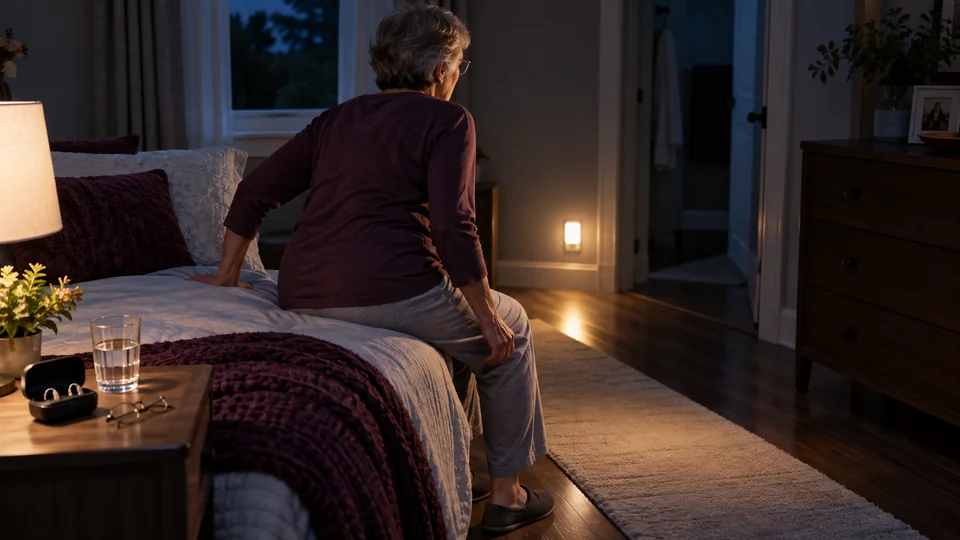
Nighttime can present additional challenges because lighting is reduced and a person may be sleepy or disoriented when getting out of bed. Hearing impairment may remove some of the environmental cues normally available during these movements.
Understanding why seniors fall out of bed can help caregivers recognize how nighttime movement, mobility limitations, medications, the bedroom environment, and other factors may combine to create risk.
- Keep important items within reach. Place glasses, a phone, appropriate alert devices, and other frequently used items where they can be reached without unnecessary movement.
- Improve nighttime lighting. Bedside and motion-activated lighting can make the route from the bed easier to see.
- Keep walking routes clear. Remove clutter, cords, unstable furniture, and other obstacles between the bed, bathroom, and doorway.
- Consider bed height. A bed that is difficult to enter or leave can make transfers less stable. Appropriate height depends on the person’s body size and mobility.
- Use appropriate transfer support. Some people may benefit from professionally recommended supports when getting into or out of bed.
- Consider bed rails carefully. Bed rails may provide useful support or help reduce rolling from bed for some individuals, but they can also introduce entrapment, climbing, or transfer hazards and are not appropriate for everyone.
- Choose suitable alert systems. Someone who cannot reliably hear an alarm may benefit from a visual, vibrating, or multi-sensory alert system.
For older adults for whom a bed rail has been determined to be appropriate, our guide to safety bed rails for seniors explains the main designs and features to consider. Product selection should follow an assessment of the person’s mobility, cognition, bed configuration, and specific safety needs.
Common mistakes to avoid
Well-intentioned safety measures can sometimes be incomplete or create new problems. Avoid these common mistakes.
- Assuming hearing loss is simply part of aging. Hearing changes may deserve assessment even when they have developed gradually.
- Assuming hearing aids alone will prevent falls. Hearing is only one possible factor. Vision, balance, mobility, medications, and environmental hazards may also need attention.
- Using poorly fitted devices. Hearing aids and mobility devices should be appropriate for the individual and maintained correctly.
- Adding too much safety equipment. Equipment that obstructs walking routes or complicates transfers can create new hazards.
- Ignoring new balance symptoms. Dizziness, vertigo, or sudden instability should not automatically be attributed to hearing loss or aging.
- Using bed rails without considering their risks. Bed rails are not universally appropriate and can create hazards in some situations.
- Neglecting physical conditioning. Environmental changes and devices do not replace the importance of maintaining appropriate strength and mobility.
When professional help may be needed
Professional assessment may be useful when hearing loss is suspected, when balance changes occur, or when falls or near-falls become a concern. The appropriate professional depends on the problem being evaluated.
- Audiologist. Can assess hearing, recommend appropriate hearing technology, and provide communication guidance.
- Primary care clinician. Can evaluate overall health and coordinate referrals when hearing, dizziness, medications, or falls raise concern.
- Physical therapist. Can assess strength, gait, and balance and provide an individualized mobility program. Specialized vestibular assessment or rehabilitation may be appropriate in some cases.
- Occupational therapist. Can evaluate daily activities and the home environment and recommend practical safety modifications.
- Pharmacist or prescribing clinician. Can review medications when dizziness, sedation, or other medication-related effects may be contributing to fall risk.
- Eye care professional. Can assess visual problems that may compound sensory and mobility limitations.
How to talk with clinicians about hearing and fall risk
Before an appointment, it can be useful to note when hearing or balance difficulties occur and how they affect daily activities. Useful information may include difficulty locating sounds, missing alarms, trouble following conversation, new dizziness, repeated stumbling, or recent falls.
Also mention whether symptoms appeared suddenly or gradually, whether medication recently changed, and whether dizziness accompanies the hearing problem. This information can help healthcare professionals determine which assessments may be appropriate.
Practical checklist to reduce fall risk when hearing loss is present
- Arrange a hearing assessment when hearing problems are suspected.
- Report dizziness, vertigo, or new balance problems rather than assuming they are caused by hearing loss.
- Review medications when dizziness, sedation, or repeated falls are present.
- Improve lighting, especially around beds, bathrooms, hallways, and stairs.
- Remove or secure common trip hazards such as loose rugs and cords.
- Keep nighttime walking routes clear.
- Use mobility aids only when appropriate and ensure they are correctly fitted.
- Maintain appropriate strength and balance activities based on individual ability.
- Use visual, vibrating, or other accessible alerts when audible alarms cannot be reliably detected.
- Address vision problems that may further reduce environmental awareness.
- Review bed height and transfer safety when getting into or out of bed is difficult.
Frequently asked questions
Can hearing aids reduce fall risk?
Hearing aids can improve access to environmental sounds and communication for many people with hearing loss. Whether this translates into a meaningful reduction in fall risk for a particular individual is less straightforward because falls usually have multiple causes. Hearing treatment should be combined with attention to balance, vision, mobility, medications, and environmental hazards when those factors are present.
Is vertigo the same as hearing loss?
No. Vertigo and hearing loss are different symptoms, although some inner ear conditions can affect both hearing and balance. Vertigo usually refers to a sensation of movement or spinning. New or significant vertigo, particularly when accompanied by other symptoms, should be medically evaluated.
Should I stop using stairs if I have hearing loss?
Hearing loss by itself does not necessarily mean stairs must be avoided. Stair safety depends more directly on balance, vision, strength, mobility, the stair design, and other health factors. Good lighting, secure handrails, uncluttered steps, and appropriate mobility support can make stairs safer. Significant balance problems should be professionally assessed.
How does combined hearing and vision loss affect fall risk?
When both hearing and vision are impaired, fewer sensory cues are available for navigating the environment. The practical impact varies between individuals, but combined sensory limitations can make environmental modifications, communication support, appropriate assistive technology, and mobility assessment particularly important.
Can exercises help if hearing loss occurs with balance problems?
Appropriate strength and balance exercises may help improve stability when balance limitations are present. When a vestibular disorder is involved, specialized vestibular rehabilitation may be appropriate. The right program depends on the cause of the balance problem and the person’s overall health and mobility.
Are there bedroom or bed safety products for people with hearing loss?
Some products can make nighttime routines more accessible, including visual or vibrating alerts, motion-activated lighting, personal emergency response systems, and other multi-sensory devices. Bed rails or other transfer supports may be appropriate for some individuals but should not be added solely because a person has hearing loss. The person’s mobility, cognition, bed setup, and specific safety needs should guide the decision.
When should I consider a home safety assessment?
A home safety assessment may be useful after a fall or repeated near-falls, when mobility or balance has changed, or when caregivers are unsure how to make the home safer. An occupational therapist can evaluate everyday routines and environmental hazards and recommend modifications suited to the individual’s needs.
Conclusion
Hearing loss may contribute to fall risk through reduced awareness of environmental sounds, greater demands on attention, and, in some cases, health conditions that affect both hearing and balance. However, hearing impairment is rarely the only factor involved in a fall.
A comprehensive approach should consider hearing alongside vision, balance, mobility, medications, physical conditioning, and environmental hazards. Practical steps can include arranging a hearing assessment, addressing new balance symptoms, improving lighting, keeping walking routes clear, reviewing medications, maintaining appropriate strength and mobility, and using accessible alert technology when needed.
Older adults experiencing repeated falls, near-falls, dizziness, vertigo, or significant changes in hearing or balance should discuss these concerns with an appropriate healthcare professional. Addressing the factors together can support safer mobility while helping preserve independence.