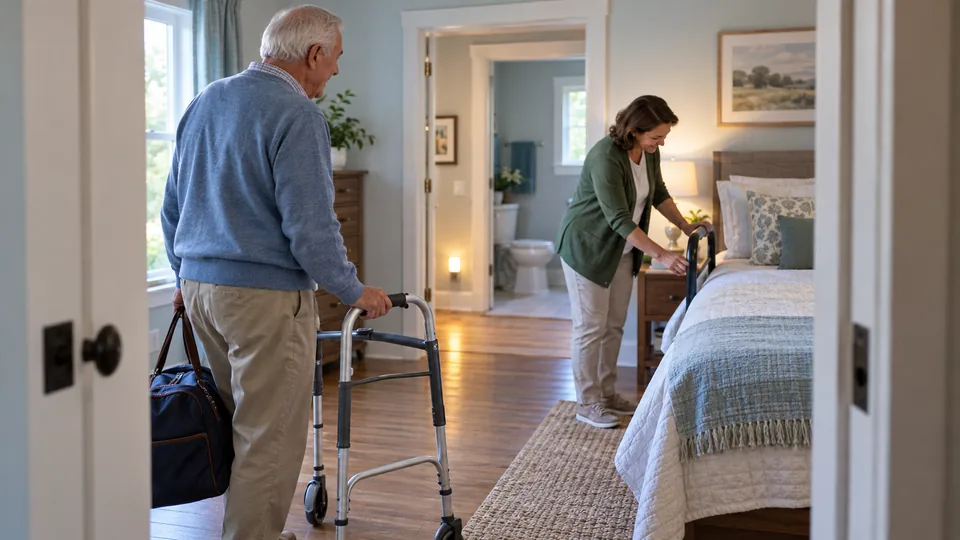

Returning home after a hospital stay can be an important milestone, but it can also be a period when everyday movements feel different from before. Illness, surgery, reduced activity, pain, medication changes, fatigue, and changes in mobility can all affect how safely a person stands, walks, transfers, and manages daily activities at home.
Learning how to prevent falls after hospital discharge starts before the person leaves the hospital. The goal is to understand what has changed, what assistance or equipment is now needed, and whether the home still matches the person’s current abilities. Discharge instructions, medication reconciliation, mobility assessment, rehabilitation, caregiver preparation, and practical changes at home can all form part of the plan.
Quick Answer
To reduce fall risk after hospital discharge, start with the person’s discharge plan rather than assuming they can immediately return to their previous routine. Confirm current mobility and activity restrictions, understand medication changes, obtain any prescribed mobility or transfer equipment, arrange recommended follow-up services, and prepare the home before the person returns.
During the first days at home, pay particular attention to transfers, walking, stairs, bathroom access, nighttime movement, dizziness, fatigue, and whether the person is actually able to use the home as expected. Fall prevention after discharge is most effective when it is matched to the person’s current abilities rather than their abilities before hospitalization.
Why Fall Risk Can Change After a Hospital Stay
A person may leave the hospital able to return home but still function differently from before admission. Even a relatively short period of illness or reduced activity can affect strength, endurance, confidence, and mobility.
Other changes may occur at the same time. Medications may have been started, stopped, or adjusted. A person may now need a walker or other mobility aid. Pain or surgical precautions may change how they move. Sleep disruption, dizziness, cognitive changes, or fatigue may also affect daily activities.
The home itself may not have changed, but the person using it has. A staircase, bathroom, low chair, high bed, or long nighttime walk that was manageable before hospitalization may temporarily or permanently become more difficult.
Common Reasons Falls Occur After Discharge
Post-discharge falls rarely have a single cause. Several factors can interact:
- Reduced strength or endurance: Illness, surgery, and periods of limited activity can make standing and walking more difficult.
- Changes in balance or gait: A person may move differently because of weakness, pain, neurological symptoms, or a new mobility limitation.
- Medication changes: Some medications can contribute to dizziness, drowsiness, changes in blood pressure, confusion, or other effects relevant to falls.
- New movement restrictions: Weight-bearing precautions, surgical restrictions, braces, or other instructions may change familiar transfer and walking techniques.
- Unfamiliar equipment: A newly prescribed walker, cane, brace, commode, or transfer aid may require training and practice.
- Home hazards: Clutter, loose floor coverings, poor lighting, stairs, bathroom surfaces, and narrow walking routes can become more important when mobility has declined.
- Nighttime movement: Fatigue, low lighting, urgency, and sleepiness can make trips from the bed to the bathroom more difficult.
- Cognitive changes: Confusion or difficulty remembering new safety instructions can affect whether assistance and equipment are used as intended.
Before Leaving the Hospital
Fall prevention should begin during discharge planning. Before leaving, make sure the patient and caregiver understand what has changed and what the person is expected to do at home.
Understand Current Mobility
Ask the healthcare team what the person can currently do safely rather than relying on what they could do before admission.
Useful questions include:
- Can the person walk independently?
- Is supervision or physical assistance needed?
- Is a walker, cane, wheelchair, brace, or other device required?
- Are there weight-bearing or movement restrictions?
- Can the person safely use stairs?
- Can they get into and out of bed independently?
- Can they transfer to and from a toilet or chair?
- Is bathing independently appropriate?
- Are there activities that should temporarily be avoided?
If the answers are unclear, ask for clarification before discharge rather than trying to determine the limits through trial and error at home.
Review Transfer Techniques
If getting into or out of bed, standing from a chair, using the toilet, or entering a vehicle has changed, ask the appropriate hospital staff to demonstrate the recommended technique.
When a caregiver will provide physical assistance at home, that caregiver should receive appropriate instruction when possible. A technique that worked before hospitalization may no longer be suitable after surgery, illness, or a change in strength.
Confirm What Equipment Is Needed
Find out whether any equipment is recommended for the transition home. Depending on the person’s needs, this might include:
- A walker or cane
- A wheelchair
- A shower chair
- Bathroom grab bars
- A raised toilet seat or commode
- A brace or other prescribed support
- Transfer equipment
- Other adaptive equipment recommended by the care team
Ask how the equipment should be used, whether it requires fitting or adjustment, and whether it should be available before the person arrives home.
Understand Medication Changes
Hospitalization can result in medications being added, discontinued, temporarily held, or given at different doses. Before discharge, obtain an up-to-date medication list and understand which instructions replace the pre-hospital routine.
Questions to clarify include:
- Which medications are new?
- Which previous medications should no longer be taken?
- Have any doses changed?
- Are any medications temporary?
- Which side effects should be reported?
- Who should be contacted if dizziness, excessive sleepiness, confusion, or other concerning symptoms occur?
Do not assume that every medication taken before admission should simply be restarted alongside the discharge prescriptions.
Confirm Follow-Up and Rehabilitation Plans
Follow-up timing depends on the reason for hospitalization, medical condition, surgery, treatment, and discharge plan. Before leaving the hospital, confirm:
- Which clinicians should be seen after discharge
- When those appointments should occur
- Whether home health services have been arranged
- Whether physical or occupational therapy is recommended
- Whether rehabilitation will occur at home or in an outpatient setting
- Who to contact if mobility worsens before the scheduled follow-up
Use the individualized discharge instructions rather than relying on a universal follow-up interval.
Prepare the Home Before the Person Returns
If possible, prepare the main living areas before discharge day. The first evening home is not the ideal time to discover that a walker cannot fit through a route or that the person cannot safely reach the bathroom.
Walk the Main Routes
Consider the routes the person will actually use:
- Entrance to the home
- Bedroom to bathroom
- Bed to chair
- Living area to kitchen
- Any necessary stairs
Look for cords, clutter, loose floor coverings, furniture, poor lighting, pets, changes in floor level, or other obstacles that could interfere with the person’s current walking pattern or mobility device.
Make Frequently Used Items Accessible
During recovery, reduce unnecessary reaching, bending, carrying, and repeated trips across the home.
Frequently used items can be placed where they are accessible without creating clutter. Depending on the person, this may include a phone, glasses, prescribed medications, water, light controls, and other everyday essentials.
Check Lighting
Make sure the person can see the floor, walking route, stairs, bathroom entrance, and bedside area clearly. Nighttime lighting deserves particular attention because a person may be tired, disoriented, or moving more slowly than usual.
A reachable bedside light and useful illumination between the bedroom and bathroom may help make nighttime movement more predictable.
Reassess the Bed Setup
The bed the person used safely before hospitalization may not necessarily suit their current mobility. Changes in strength, pain, weight-bearing ability, balance, or transfer technique can make the old setup more difficult.
Check whether the person can:
- Approach the bed safely
- Sit on the mattress with control
- Position the feet appropriately
- Move between sitting and lying as required
- Stand from the bed using the recommended technique
- Reach any prescribed mobility aid without unsupported walking
Bed height, mattress compression, the stability of the frame, bedside furniture, lighting, and available transfer supports can all affect the result.
If the bed itself needs to be reassessed, our guide on how to make a bed safer for seniors explains bed height, mattress stability, bedside layout, transfer supports, and other factors in more detail.
Pay Particular Attention to Bed Transfers
Getting into and out of bed can become more difficult after hospitalization, especially when the person returns home with weakness, pain, balance problems, dizziness, or new movement restrictions.
Watch the complete sequence rather than simply asking whether the person can “get out of bed.” Consider whether they can sit securely, establish foot position, stand with control, become steady, access the appropriate mobility aid, and begin walking safely.
Bed transfers can be especially difficult when someone returns home with new weakness, balance problems, or changes in mobility. Our guide to preventing falls from bed for seniors looks more closely at bedside risks and nighttime transfers.
Do Not Add a Bed Rail Automatically After Discharge
A bed rail may seem like an obvious response when someone returns home with reduced mobility, but an adult portable bed rail is not a routine post-discharge fall-prevention measure.
For selected users, an appropriately chosen device may provide assistance with repositioning or getting into and out of bed. However, adult portable bed rails can also create hazards, including entrapment and falls associated with attempting to climb over a rail.
The home situation can also differ substantially from the hospital:
- The home mattress may have different dimensions and compression.
- The bed frame may not support the same equipment.
- The person may receive less assistance at home.
- Mobility may have changed during hospitalization.
- A device used in the hospital may serve a different purpose from a consumer portable bed rail used at home.
If a rail or assist handle is being considered, assess the person’s physical and cognitive abilities, the intended purpose, the mattress and bed frame, product compatibility, installation, and potential entrapment areas. Follow the product instructions and relevant recommendations from the healthcare or therapy team.
The First Days at Home
The transition home provides an opportunity to see whether the discharge plan works in the real environment. Avoid assuming that the person will immediately resume every pre-hospital activity.
Observe Everyday Transfers
Pay attention to how the person actually manages:
- Getting into and out of bed
- Standing from chairs
- Using the toilet
- Entering and leaving the shower or bathing area
- Using stairs
- Getting into and out of a vehicle
A task that can technically be completed may still be unsafe if it requires repeated attempts, excessive momentum, unstable furniture, or substantial loss of balance.
Watch for Changes in Symptoms
New or worsening symptoms can affect mobility and may need professional attention. Examples include:
- Dizziness
- Unusual drowsiness
- New confusion
- Increasing weakness
- New numbness or loss of coordination
- Increasing pain
- Shortness of breath with routine activity
- Difficulty following the mobility plan provided at discharge
Follow the discharge instructions for whom to contact and how urgently symptoms should be evaluated.
Use Mobility Aids as Instructed
If a walker, cane, wheelchair, brace, or another mobility device has been prescribed or recommended, use it according to the instructions provided by the healthcare or therapy team.
A newly prescribed mobility aid may require fitting and practice. It should not simply be placed in the home with the expectation that the person will automatically know how to use it.
Also consider where the device is positioned. Someone who needs a walker after standing should not have to take unsupported steps across the room to retrieve it.
Follow the Individual Rehabilitation Plan
Regaining mobility after hospitalization may involve physical therapy, occupational therapy, a prescribed home exercise programme, walking progression, or other rehabilitation.
The appropriate programme depends on the person’s diagnosis, surgery, restrictions, strength, balance, and previous level of function. Follow the rehabilitation plan provided for that individual rather than adding generic exercises simply because they are commonly recommended for fall prevention.
A physical therapist may address areas such as:
- Strength
- Balance
- Walking
- Transfers
- Stairs
- Use of mobility aids
- Progression of activity
An occupational therapist may focus on daily activities, bathroom and bedroom setup, adaptive equipment, caregiver techniques, and whether the home environment matches the person’s current abilities.
Review Medications After Discharge
Medication reconciliation is particularly important after hospitalization because the discharge list may differ from the person’s previous routine.
A clinician or pharmacist can review the complete medication list, including prescription medications, over-the-counter products, and supplements where relevant.
The review may consider:
- Medications that were started or stopped in the hospital
- Changes in dose
- Potential duplication
- Possible interactions
- Dizziness or changes in blood pressure
- Drowsiness or sedation
- Confusion
- Vision-related effects
- Other symptoms that may affect safe mobility
Do not independently change medication doses, schedules, or timing in an attempt to reduce fall risk. Discuss suspected medication-related problems with the appropriate clinician or pharmacist.
Plan for Nighttime Bathroom Trips
Nighttime movement can be challenging during recovery because the person may be sleepy, fatigued, in pain, or less steady than during the day.
Before bedtime, consider whether:
- The route to the bathroom is clear
- Useful lighting is available before the person stands
- The prescribed mobility aid is accessible
- Appropriate footwear can be reached safely
- The person currently needs assistance with toileting
- A bedside commode has been recommended or would warrant assessment
If nighttime urinary frequency or urgency has become a significant problem, discuss it with an appropriate healthcare professional rather than relying solely on fluid restriction or improvised toileting routines.
Review the Bathroom Setup
Bathrooms combine transfers, hard surfaces, water, and limited space, so a person’s post-discharge abilities should be considered carefully.
Depending on the discharge recommendations and individual needs, an assessment may consider:
- Grab bars
- A shower chair or bath seat
- Toilet-height adaptations
- A bedside commode
- Transfer techniques
- Floor traction
- Whether assistance is currently needed
Do not assume that towel bars, sinks, lightweight furniture, or other household fixtures are safe substitutes for properly installed supports.
Take Stairs Seriously
If stairs are necessary at home, make sure the discharge team has addressed whether the person can use them and what technique, assistance, or equipment is required.
Before the person returns home, check that:
- Stairs are adequately lit
- Handrails are secure
- Steps are clear of stored objects
- The person is not expected to carry items that interfere with safe stair use
- Any mobility restrictions are compatible with the required staircase
If the person cannot safely reach essential rooms, the short-term home setup may need to be reorganized.
Footwear and Clothing Matter
Footwear should fit securely and be appropriate for the person’s mobility needs and floor surfaces. Loose or unstable footwear can make an already altered gait more difficult to control.
Clothing should also allow safe movement. Very long garments, loose hems, or items that interfere with a mobility aid can create unnecessary obstacles during recovery.
Caregiver Preparation
Caregivers should understand what the person can do independently, what requires supervision, and what requires physical assistance.
Before or shortly after discharge, clarify:
- How much assistance is needed for transfers
- How prescribed mobility equipment should be used
- Whether the person can be left alone during particular activities
- What symptoms should be reported
- Who to contact with questions
- What to do if the person’s mobility declines
Caregivers who are expected to provide hands-on transfer assistance should receive appropriate training rather than relying on improvised lifting techniques.
Be Careful With Monitoring Technology
Medical alert systems, motion sensors, wearable devices, and bed-exit alarms may be useful in selected situations, but they do not remove the underlying cause of a fall.
A bed-exit alarm, for example, may alert a caregiver that someone is getting up, but it does not physically stabilize the person during the transfer. Its usefulness depends on whether someone can respond appropriately and in time.
Technology is best considered an additional layer of a broader plan rather than a substitute for appropriate mobility support, rehabilitation, environmental changes, or caregiver assistance.
Common Post-Discharge Mistakes
- Assuming mobility is back to normal: being medically ready for discharge does not necessarily mean every previous activity can immediately be resumed.
- Using the old medication routine: the discharge medication list may contain important changes.
- Putting a new mobility aid aside: if an aid has been prescribed, the person may need it even if they did not use one before hospitalization.
- Improvising transfer techniques: movement restrictions or weakness may require a different approach.
- Adding a bed rail automatically: a rail can introduce hazards and should solve a defined problem for an appropriate user.
- Waiting until after a fall to inspect the home: major walking and transfer routes can be reviewed before the person arrives.
- Ignoring nighttime mobility: a person who appears stable during the day may have more difficulty when tired, sleepy, or moving in low light.
- Changing medications independently: suspected medication effects should be discussed with the appropriate healthcare professional.
- Starting generic exercises without considering restrictions: rehabilitation should follow the person’s individualized plan.
When to Contact the Healthcare Team
Use the discharge instructions as the primary guide for follow-up and symptom reporting. Contact the appropriate healthcare professional when there are concerns such as:
- New or worsening difficulty walking
- Repeated falls or near-falls
- Increasing weakness
- New or worsening dizziness
- Medication side effects affecting alertness or mobility
- Increasing confusion or changes in behavior
- Pain that substantially interferes with safe movement
- Difficulty following weight-bearing or movement restrictions
- Equipment that does not fit or cannot be used safely
- A home environment that does not support the person’s current mobility
Depending on the issue, the appropriate contact may be the discharging team, primary care clinician, surgeon or specialist, home health service, physical therapist, occupational therapist, pharmacist, or another professional identified in the discharge plan.
When a Fall Needs Urgent Evaluation
A fall after discharge should be taken seriously, particularly when the person has recently had surgery, is taking medications that increase bleeding risk, or has other significant medical conditions.
Seek urgent medical help when a fall is accompanied by concerning symptoms such as loss of consciousness, a suspected serious injury, inability to move normally, severe or worsening pain, significant bleeding, new neurological symptoms, or another acute change suggesting an emergency.
If the person has fallen and cannot get up safely, do not attempt an unsafe lift. Follow the emergency or post-fall instructions provided by the healthcare team and obtain appropriate assistance.
If a Fall or Near-Fall Occurs
Even when there is no obvious serious injury, a fall or near-fall can reveal that the current discharge plan and home setup need reassessment.
Useful questions include:
- What was the person doing immediately before the incident?
- Did it occur during a transfer or while walking?
- Was dizziness involved?
- Was the prescribed mobility aid being used?
- Was there an environmental obstacle?
- Did pain or weakness contribute?
- Had medication recently been taken or changed?
- Did the person misunderstand or forget an instruction?
- Has mobility changed since leaving the hospital?
These details can help the healthcare or rehabilitation team identify what needs to change.
A Practical Post-Discharge Fall-Prevention Checklist
Before and after the person returns home, confirm the following:
- The current mobility level is understood.
- Weight-bearing and activity restrictions are clear.
- Required mobility and transfer equipment is available.
- The patient and caregiver know how to use that equipment.
- The current medication list has been reconciled.
- Follow-up appointments and rehabilitation are arranged as directed.
- Main walking routes are clear.
- Lighting is adequate during both daytime and nighttime movement.
- The bed can be entered and exited using the recommended technique.
- The bathroom setup matches the person’s current abilities.
- Necessary stairs have been assessed.
- The prescribed mobility aid is accessible when needed.
- Caregivers understand what level of assistance is required.
- The household knows whom to contact if mobility or symptoms worsen.
For a broader home-based checklist that can continue to be used after the immediate discharge period, see our fall prevention checklist for seniors.
Frequently Asked Questions
Why can fall risk increase after hospital discharge?
A hospital stay can be associated with changes in strength, endurance, balance, medications, pain, cognition, and mobility. The person may return to the same home while functioning differently from before admission, which can make familiar transfers and walking routes more difficult.
Should someone use a walker after leaving the hospital?
Use the mobility device recommended for that individual. Whether a cane, walker, wheelchair, or no device is appropriate depends on the person’s current mobility and assessment. A newly recommended device may also require fitting and training.
How soon should a person see a doctor after hospital discharge?
There is no single follow-up interval that applies to every hospital discharge. Timing depends on the medical condition, treatment, surgery, complications, and discharge plan. Follow the appointment and contact instructions provided by the hospital, and seek earlier advice if concerning symptoms or mobility problems develop.
Should medications be reviewed after discharge?
Yes, understanding the current medication list is an important part of the transition home. Hospitalization can involve starting, stopping, or changing medications. Questions about the discharge list, possible side effects, or differences from the pre-hospital routine should be discussed with the appropriate clinician or pharmacist.
Are bed rails a good way to prevent falls after discharge?
Not routinely. An adult portable bed rail may be appropriate for selected users who need assistance with bed mobility or transfers, but it is not a universal post-discharge fall-prevention device. Bed rails can introduce hazards such as entrapment or falls associated with climbing over them. The user, intended purpose, bed, mattress, product, and installation all need to be considered.
Should the bed be lowered after discharge?
Not automatically. A lower bed may reduce fall distance in some circumstances, but it can also make standing more difficult for someone with weak legs, painful joints, or transfer limitations. Bed height should be evaluated in relation to the person’s current transfer ability.
What should caregivers watch during the first few days at home?
Pay attention to transfers, walking, dizziness, fatigue, confusion, pain, use of prescribed mobility aids, medication-related symptoms, nighttime bathroom trips, and whether the person can safely perform the activities expected in the discharge plan.
Can physical or occupational therapy help after discharge?
When indicated, rehabilitation can address problems that affect safe mobility at home. Physical therapy may focus on strength, balance, gait, transfers, and mobility aids, while occupational therapy may address daily activities, equipment, caregiver techniques, and the home setup. Follow the individualized rehabilitation recommendations provided for the patient.
What should happen after a near-fall?
A near-fall can be useful information even when no injury occurs. Consider what the person was doing, whether dizziness or weakness was present, whether equipment was being used, and whether an environmental problem contributed. Repeated or concerning near-falls should be discussed with the appropriate healthcare professional.
Conclusion
Preventing falls after hospital discharge starts with recognizing that the person’s abilities may have changed even though they are returning to a familiar home. The safest transition is based on current mobility, current medications, current restrictions, and the actual tasks the person needs to perform after discharge.
Before leaving the hospital, clarify mobility, equipment, medication changes, rehabilitation, follow-up, and caregiver responsibilities. Before the person arrives home, prepare the main walking routes, bedroom, bathroom, lighting, and necessary equipment. During the first days at home, observe how the person actually transfers and walks rather than assuming recovery has already returned them to their previous level of function.
Falls and near-falls should also be treated as information. They may indicate that strength, medications, equipment, the home setup, caregiver assistance, or the discharge plan needs to be reassessed. Matching those interventions to the person’s changing abilities can support a safer transition from hospital to home.