
Helping an older adult move safely between bed and standing is one of the most common caregiving tasks. How to help seniors get in and out of bed is a question many family caregivers and home care professionals ask. This article explains practical, safe steps, equipment options, home modifications, and when to involve professionals. It focuses on reducing fall risk, preserving independence, and making transfers comfortable and predictable.
Quick answer
Start by assessing the person’s mobility, strength, and balance. Use simple safety steps: clear the path, position the bed and chair, provide stable footwear, and use appropriate transfer supports when needed. People who cannot safely stand may require specialized transfer equipment and hands-on training. Involve a physical or occupational therapist when transfers are difficult, inconsistent, or when you need guidance on safe techniques.
Nighttime disorientation and bed height are key contributors, and Seniors Fall Out examines common causes and prevention.
Why this matters
Transfers are a frequent moment of risk for older adults. Falls while getting into or out of bed can cause injuries that reduce independence and make future movement more difficult. Safe transfers can protect the older adult while also reducing physical strain on caregivers.
The goal is not simply to move someone from one place to another. Whenever possible, the person should participate according to their abilities. Thoughtful changes to routine, equipment, and bedroom layout can make transfers more predictable while preserving mobility, confidence, and dignity.
How difficulties getting in and out of bed happen
Problems with transfers can arise from a combination of physical limitations, medications, environmental conditions, and cognitive factors. Reduced leg strength, poor balance, joint pain, dizziness, and difficulty coordinating movement can all make standing up or lowering onto a bed more challenging.
Environmental conditions matter as well. A bed that is unusually high or low, inadequate lighting, slippery flooring, clutter, or a mobility aid positioned out of reach can turn an otherwise manageable transfer into a difficult one.
Main causes of transfer difficulty
- Muscle weakness and reduced balance. Reduced strength or conditions affecting mobility can make standing and controlling weight shifts more difficult.
- Orthostatic symptoms. Some people experience lightheadedness or weakness after standing. Blood pressure changes, medications, dehydration, and other health conditions may contribute.
- Pain and stiffness. Hip, knee, back, or other musculoskeletal problems can restrict movement and make transfers uncomfortable.
- Cognitive impairment. Confusion, impaired judgment, or difficulty following instructions can make transfers less predictable.
- Environmental hazards. Unsuitable bed height, loose rugs, poor lighting, clutter, and blocked pathways can increase risk.
- Inappropriate equipment or technique. Using an unsuitable assistive device or attempting a transfer beyond the caregiver’s abilities can lead to injury.
Risk factors that increase transfer problems
- Multiple medications, particularly when they contribute to dizziness, drowsiness, or changes in blood pressure.
- Recent hospitalization, illness, or surgery that has reduced strength or mobility.
- A history of falls or near-falls.
- Visual impairment.
- Balance or vestibular problems.
- Cognitive changes that affect safety awareness or the ability to follow instructions.
- Body size or physical limitations that make assistance more difficult for the caregiver.
Who is most at risk?
Older adults who are frail, take multiple medications, have significant mobility limitations, or have recently experienced illness or hospitalization may have more difficulty with bed transfers. People with cognitive impairment may also attempt to get out of bed unexpectedly or have difficulty following a safe sequence of movements.
Caregiver factors matter too. A family member who has not received transfer training may unintentionally use techniques that strain their own back or shoulders or make the older adult less stable. When substantial physical assistance is required, professional instruction can be valuable for both people.
Practical prevention strategies
Safer transfers usually depend on a combination of environmental preparation, appropriate assistance, suitable equipment, and attention to the person’s changing abilities. The following strategies can help caregivers identify common problems and make everyday transfers more manageable.
Assess the person before each transfer
- Ask how they feel. New dizziness, unusual weakness, chest pain, shortness of breath, or other concerning symptoms may require medical attention rather than proceeding with a routine transfer.
- Notice changes from normal. Someone who normally transfers easily but suddenly cannot do so may need assessment for an underlying problem.
- Consider fatigue. A person who is unusually tired may have less strength and balance than usual.
- Check footwear. Make sure footwear is secure and appropriate for the flooring and the person’s mobility.
- Explain what is happening. Clear, simple communication can make movements more coordinated, particularly when some assistance is required.
Prepare the environment
- Clear the route between the bed, bathroom, chair, and doorway.
- Remove or secure loose rugs, cords, and other trip hazards.
- Provide enough lighting to see the floor and nearby furniture clearly.
- Place frequently used items within easy reach.
- Position mobility aids where they can be reached safely.
- Make sure wheelchairs, commodes, or other wheeled equipment are secured according to their instructions before a transfer.
Adjust bed and furniture height
Bed height can make a substantial difference to transfer difficulty. A bed that is too low may require greater leg strength to stand, while a bed that is too high may make it difficult to place the feet securely on the floor before standing.
A useful bed height depends on the person’s body proportions, strength, mobility, and transfer technique. The feet should generally be able to make stable contact with the floor when sitting at the edge of the bed. A physical or occupational therapist can provide individualized recommendations when transfers are difficult.
Wear appropriate clothing and footwear
- Choose clothing that allows comfortable movement and does not trail near the feet.
- Avoid loose garments that can catch on furniture or mobility equipment.
- Use secure footwear appropriate for the person and the flooring.
- Avoid worn or poorly fitting slippers that may slide or come off during a transfer.
Use assistive devices correctly
Assistive devices can make transfers easier and may allow some people to remain more independent, but the correct device depends on the person’s strength, balance, ability to bear weight, cognition, and home environment.
- Gait belts. A gait belt may give a trained caregiver a more secure point of contact while assisting some transfers. It is not appropriate in every situation, and caregivers should receive instruction in its proper use rather than using it as a lifting device.
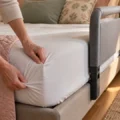
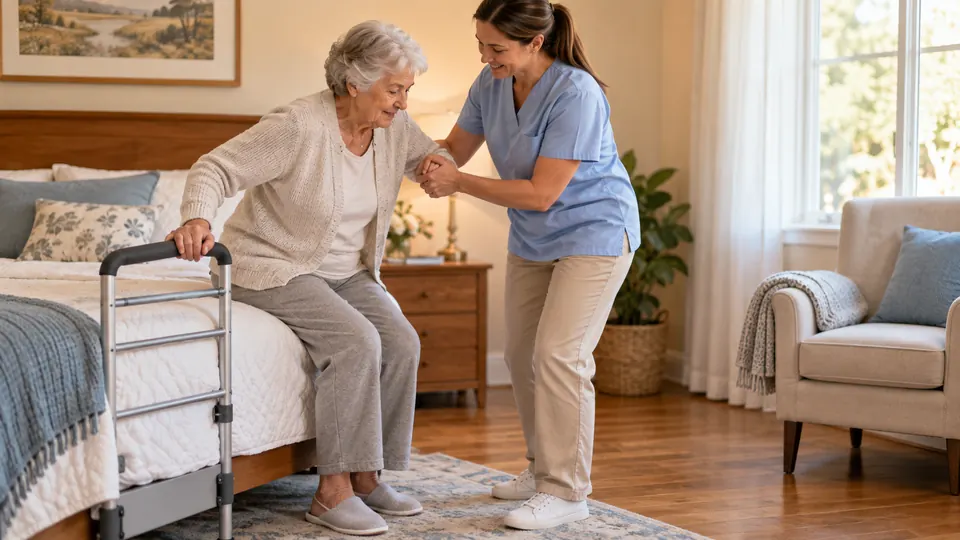
- Bed rails and bedside support rails. Some older adults use a bedside rail or handle as a stable point of support while repositioning or moving between sitting and standing. The details matter here: rail length, mattress compatibility, attachment method, available handholds, and the space between components can all affect usability and safety. If you are comparing this type of equipment, these safety bed rails for seniors show the different designs commonly used around the bedside. A rail should still be selected for the individual rather than treated as a universal solution, particularly when cognitive impairment or entrapment risk is present.
- Transfer or slide boards. These can bridge the space between surfaces for certain people who have appropriate upper-body control and have been taught how to use them safely.
- Mechanical lifts. A mechanical lift may be appropriate when a person cannot safely complete a transfer with ordinary assistance. The correct lift, sling, and technique depend on the individual, and caregivers need appropriate training.
- Bedside commodes. For some people, reducing the distance required for nighttime toileting can make routines more manageable. Placement should not obstruct normal walking or transfers.
- Adjustable beds. Powered positioning may make it easier for some people to move from lying to sitting or achieve a more suitable transfer position.
- Trapeze or overhead assists. These may help selected individuals reposition themselves when they have sufficient upper-body function and the equipment is appropriate for their needs.
Understand the basic sequence of a transfer
There is no single transfer technique that is appropriate for every older adult. The amount and type of assistance depend on strength, weight-bearing ability, balance, pain, cognition, and medical conditions. The following examples describe the general sequence involved rather than replacing hands-on instruction from a physical or occupational therapist.
Moving from lying to sitting and preparing to stand
- Make sure the area around the bed is clear and the necessary mobility aid is available.
- Explain the movement before beginning so the person can participate as much as possible.
- Allow the person to move toward the edge of the bed using the method they have been taught or can perform safely.
- Once seated, make sure they are stable before attempting to stand.
- Position the feet securely on the floor when possible.
- Pause if the person reports dizziness, weakness, or other unexpected symptoms.
- Use only the level of physical assistance and transfer equipment appropriate for that individual.
- Make sure the destination, such as a chair or walker, is correctly positioned before standing begins.
Returning to bed
- Clear the route and make sure the bed is ready before beginning the transfer.
- Position the person close enough to the bed that unnecessary reaching or stepping is avoided.
- Make sure they are stable before beginning to sit.
- Use the transfer technique recommended for the person rather than pulling on their arms or clothing.
- Once seated securely, allow time to reposition before moving the legs onto the bed.
- Use appropriate assistive equipment if the person cannot reposition or lift their legs independently.
- Before leaving, make sure frequently used items and any appropriate call device are accessible.
Know when more than one caregiver or specialized equipment is needed
If a person cannot safely support their own weight, requires substantial physical assistance, or behaves unpredictably during transfers, a routine one-person transfer may not be appropriate.
A physical or occupational therapist can assess the transfer and determine whether a different technique, additional caregiver assistance, or mechanical equipment is needed. Mechanical lifts should be used according to the manufacturer’s instructions and with appropriate training.
Support strength, balance, and mobility
Maintaining strength and mobility can make everyday transfers easier for many older adults. Appropriate activity may include exercises targeting lower-body strength, balance, and functional movements such as sitting and standing.
The appropriate program depends on the person’s abilities and medical conditions. Someone with significant weakness, repeated falls, or major balance limitations may benefit from assessment by a physical therapist before beginning a new exercise program.
Review medications and changing health conditions
Transfers can become more difficult when a person develops dizziness, drowsiness, weakness, pain, or changes in blood pressure. Medication effects may contribute in some cases, but illness, dehydration, neurological problems, cardiovascular conditions, and other factors can also affect mobility.
A noticeable change in transfer ability should not automatically be attributed to aging. New or worsening symptoms deserve discussion with an appropriate healthcare professional.
Common equipment options, pros and cons
Equipment should be selected according to the individual rather than simply adding more devices around the bed. Each option solves a different problem.
Gait belts
Potential advantages: Can provide a trained caregiver with a more secure point of contact during appropriate transfers.
Limitations: Requires correct technique and is not suitable for every person or medical situation.
Bed rails
Potential advantages: Certain bedside rails or handles can provide a handhold for repositioning and transfers and may help reduce unintended rolling for selected users.
Limitations: Rails can create entrapment, climbing, or transfer hazards, particularly when they are poorly fitted or inappropriate for the person.
Transfer boards
Potential advantages: Can assist certain transfers without requiring the person to stand fully.
Limitations: Require suitable physical ability, compatible surfaces, and correct technique.
Mechanical lifts
Potential advantages: Can reduce the need for manual lifting when a person cannot safely participate in an ordinary transfer.
Limitations: Require appropriate equipment selection, sufficient space, maintenance, and caregiver training.
Adjustable beds
Potential advantages: Powered positioning can make it easier for some users to move toward a sitting position and can improve comfort.
Limitations: They can be expensive, and compatibility with rails or other accessories needs to be checked carefully.
Bedside commodes
Potential advantages: Can reduce the distance required for nighttime toileting for selected users.
Limitations: Require suitable placement, cleaning, and enough room for safe transfers.
Common mistakes to avoid
- Attempting a transfer beyond your physical ability. A caregiver should not try to compensate for inadequate equipment or insufficient assistance by manually lifting more weight than they can safely control.
- Pulling on the person’s arms. This can be uncomfortable and may cause injury or instability.
- Rushing. Transfers become less predictable when either person moves before the other is ready.
- Using improvised equipment. Furniture or objects not designed for transfer support may move, break, or tip.
- Failing to secure wheeled equipment. A wheelchair, commode, or other device that moves unexpectedly can make a transfer dangerous.
- Leaving an unstable person unsupported at the bed edge. Someone with poor sitting balance may require supervision or assistance.
- Installing bed rails without considering entrapment and transfer risks. More rail is not necessarily more safety.
When professional help may be needed
Professional assessment becomes particularly important when transfers are unsafe, inconsistent, or physically demanding for the caregiver.
Consider seeking help when:
- The person cannot reliably bear weight or participate in the transfer.
- Falls or repeated near-falls occur during transfers.
- The caregiver experiences pain or cannot safely provide the required assistance.
- There is new or progressive weakness.
- Transfer ability changes substantially after illness, hospitalization, surgery, or medication changes.
- Cognitive impairment leads to unpredictable or unsafe attempts to leave the bed.
- You are uncertain which equipment or technique is appropriate.
Physical therapists and occupational therapists can assess mobility, transfers, equipment needs, and the home environment. Other healthcare professionals may also be involved when medical symptoms or medication effects are contributing to the problem.
Specific tips for nighttime transfers
- Provide accessible lighting before the person begins moving.
- Keep the route between the bed and bathroom clear.
- Keep glasses and necessary mobility aids within safe reach.
- Place a phone, call button, or other appropriate means of requesting assistance near the bed when needed.
- Consider whether a bedside commode is appropriate when walking to the bathroom is particularly difficult.
- Report medication-related drowsiness, dizziness, or nighttime instability to the prescribing healthcare professional rather than changing medication independently.
- Make sure any floor protection or bedside equipment does not itself create a trip or transfer hazard.
Considerations for people with cognitive impairment
Transfers can become less predictable when dementia or another cognitive condition affects judgment, orientation, or the ability to follow instructions. The safest approach depends on the person’s behavior, mobility, and environment.
- Keep routines familiar and instructions short and calm.
- Maintain a clear and predictable bedroom layout.
- Use appropriate lighting to reduce nighttime disorientation.
- Keep hazards away from the bed and normal walking routes.
- Consider monitoring or alert systems when appropriate to the care setting.
- Evaluate bed rails particularly carefully because a person who does not understand the rail may attempt to climb over it or become trapped.
When nighttime behavior creates repeated safety problems, an occupational therapist or other qualified healthcare professional can help assess the environment and identify suitable strategies.
Training and practicing transfers
Hands-on instruction can be particularly valuable for family caregivers. A physical or occupational therapist can observe how the older adult currently moves, identify where the transfer becomes difficult, and teach a technique appropriate to that person’s abilities.
Training can also help caregivers learn how to position equipment, provide only the assistance that is needed, recognize when a transfer should not be attempted, and protect themselves from unnecessary strain.
Cost, funding, and finding equipment
Transfer equipment ranges from relatively simple bedside supports to adjustable beds and powered lifts. Cost varies considerably depending on the device and whether it is purchased, rented, or supplied through a healthcare program.
Insurance and public program coverage depend on location, eligibility, medical necessity, and the specific equipment involved. Before purchasing expensive equipment, it can be useful to ask a healthcare professional, insurer, medical equipment supplier, or local aging service whether assessment, rental, loan, or funding options are available.
Frequently asked questions
What is the safest way to help a senior stand up from bed?
There is no single safest technique for everyone. The appropriate method depends on strength, balance, weight-bearing ability, pain, cognition, and the amount of assistance required. The person should participate as much as safely possible, and caregivers should avoid pulling on the arms or attempting a transfer they cannot physically control. A physical or occupational therapist can teach an individualized technique when assistance is regularly needed.
Are bed rails safe to use?
Bed rails can be useful for selected people, particularly when a properly fitted bedside support provides a stable handhold. They are not appropriate for everyone. Entrapment, climbing, gaps between the rail and mattress, and interference with transfers are important considerations. Suitability depends on the person and the specific bed-and-rail combination.
When should we consider a mechanical lift?
A mechanical lift may be considered when ordinary assisted transfers cannot be performed safely or when the person cannot adequately participate in the transfer. The decision should be based on an assessment of the person’s mobility and care needs. Caregivers require appropriate training in the particular lift and sling being used.
How can we reduce nighttime falls when the person needs to use the bathroom?
Keep the route well lit and free of obstacles, make necessary mobility aids accessible, and avoid rushing. For some people, a bedside commode may reduce the distance required for nighttime toileting. Repeated nighttime urgency, dizziness, or medication-related problems should be discussed with an appropriate healthcare professional.
Can exercise help with transfers?
Strength, balance, and functional movement training can make transfers easier for many older adults. The appropriate exercises depend on the person’s health and mobility. A physical therapist can develop a program when significant weakness, balance problems, or previous falls are present.
What should I do if the person feels dizzy when standing?
Do not continue walking while the person is unstable. Help them return to a safe position if this can be done safely and seek assistance when necessary. Recurrent dizziness when standing should be reported to a healthcare professional because medications, blood pressure changes, dehydration, and other health conditions can contribute.
How do we handle transfers when there is little space in the bedroom?
Start by removing unnecessary furniture and creating the clearest possible route around the bed. Equipment should be selected according to the available space as well as the person’s needs. An occupational therapist can assess a small bedroom and recommend a layout or equipment arrangement that allows safer movement.
Common real-world scenarios and practical considerations
A senior who is weak but can still participate in standing
- Make sure the bed height allows stable foot placement.
- Keep the appropriate mobility aid nearby.
- Allow enough time for the person to perform the parts of the transfer they can still manage.
- Ask a therapist for guidance if progressively more physical assistance is required.
A senior who frequently gets up during the night
- Provide accessible lighting.
- Keep the route clear and predictable.
- Make sure necessary mobility aids are available before bedtime.
- Consider whether reducing the walking distance with an appropriately placed bedside commode would be useful.
A senior with cognitive impairment who gets out of bed unexpectedly
- Keep the bedroom arrangement consistent.
- Reduce clutter and other environmental hazards.
- Use calm, simple communication when assistance is needed.
- Evaluate monitoring devices and bed rails according to the person’s specific behavior rather than assuming they will prevent a fall.
Practical checklist before a transfer
- Is the person alert and able to participate as expected?
- Has their mobility changed since the last transfer?
- Are they wearing appropriate footwear?
- Is the route clear and adequately lit?
- Is the destination ready before the transfer begins?
- Is any wheeled equipment properly secured?
- Is the bed at a suitable height?
- Are necessary mobility or transfer aids available?
- Does the caregiver have the training and physical ability required for this transfer?
- Does the person understand what is about to happen?
Summary and next steps
Helping a senior get in and out of bed safely starts with understanding what the person can still do independently and where assistance is actually needed. Strength, balance, cognition, pain, medications, bed height, lighting, and bedroom layout can all affect the transfer.
Begin with practical changes: clear the route, provide adequate lighting, position mobility aids within reach, review bed height, and avoid rushing. Use transfer equipment only when it is appropriate for the individual and make sure caregivers know how to use it correctly.
If transfers are becoming harder, unpredictable, or physically demanding, a physical or occupational therapist can assess the situation and provide individualized training. A sudden decline in transfer ability, new dizziness, significant weakness, or other new symptoms should also be discussed with an appropriate healthcare professional.
Further resources
Local aging services, primary care clinicians, home health providers, physical therapists, and occupational therapists may be able to provide assessments, caregiver training, or information about suitable equipment. When specialized equipment is needed, obtaining an assessment before purchase can help avoid choosing a device that does not match the person’s mobility, bedroom layout, or care needs.